
Early and unofficial worked solutions
Early Solutions to the 2026 AP United States History FRQs | Step by Step
Complete model responses for every short-answer question, the seven-document DBQ, and all three long-essay options, with contextualization, evidence, sourcing, reasoning, and rubric-aligned explanations.
How to earn points on the 2026 APUSH FRQs
Start with the task verb. Describe requires a clear historical characteristic. Explain requires a causal or logical link. Evaluate the extent requires a defensible judgment, categories of analysis, and a qualification. For every claim, name a specific fact and explain how it proves the point.
| Question type | Point structure | Core workflow |
|---|---|---|
| SAQ | 3 points, one for each part A-C | Direct answer, specific evidence, reasoning link |
| DBQ | 7 points | Thesis, context, document evidence, outside evidence, sourcing, complexity |
| LEQ | 6 points | Thesis, context, evidence, historical reasoning, complexity |
Review the verified AP U.S. History guide and APUSH Units 1-9 overview alongside these solutions. More prompts are available in the AP U.S. History FRQ archive, and the AP U.S. History score calculator can help estimate an overall score.
Short-answer question 1
Competing Interpretations of Reconstruction
Ferrell emphasizes the failure to restructure Southern society; Summers emphasizes reunion and permanent emancipation.
Step 1: Identify each historian's standard of success
Claudine Ferrell
She asks whether Reconstruction transformed Southern society and sustained liberty and equality for formerly enslaved people. By that standard, it largely failed.
Mark Summers
He asks whether Reconstruction preserved the Union, restored peacetime federalism, and made emancipation permanent. By that standard, it largely succeeded.
Step 2: Answer all three subparts
Part A: Explain the difference
Part B: Support Ferrell
Use the Compromise of 1877 and the withdrawal of federal troops. Redeemer Democrats regained state governments, suppressed Black voting, and helped establish the Jim Crow order.
Part C: Support Summers
Use the Thirteenth Amendment, which made emancipation permanent and placed a central Union war aim in the Constitution.
For period review, see the verified APUSH Unit 5 study notes.
Short-answer question 2
Minweweh, British Expansion, and Native Resistance
The 1761 Fort Detroit speech occurred while British forces were replacing the French at western forts after victories in the Seven Years' War.
Read the speech as diplomacy
Minweweh uses kinship, treaty, and gift-giving language. His point is that British occupation of a French fort did not equal conquest of Native nations. Peace required negotiation and reciprocal obligations with a sovereign Ojibwe people.
- Cause before the speech: British forces defeated France and occupied Great Lakes posts. British officials reduced gift giving and treated Native peoples more like conquered subjects than diplomatic partners.
- Circumstance in the speech: Native leaders rejected British claims of conquest and remained attached to French diplomatic relationships.
- Result after the speech: These grievances helped cause Pontiac's War in 1763, which contributed to the Proclamation of 1763.
Part A: Intended purpose
Part B: Earlier development
Part C: Later development
Connect this answer to the verified APUSH Unit 3 study notes.
Optional short-answer question 3
Patriot Ideas and Their Legacy
A coherent response can connect natural rights and consent, colonial self-government before 1765, and the Bill of Rights after independence.
Part A: Patriot idea
Part B: Development from 1607-1765
Part C: Influence from 1783-1830
Optional short-answer question 4
Civil Rights Movements, 1945-2000
The model uses one consistent theme: organized communities pressed the federal government to enforce equal citizenship.
Part A: Reform from 1945-1970
Part B: Development from 1890-1945
Part C: Development from 1970-2000
Review the verified APUSH Unit 8 and Unit 9 study notes for this period.
Document-based question
Women's Participation in Public Life, 1783-1855
Evaluate the extent of change. The strongest judgment combines substantial expansion with continuing legal, political, racial, class, and cultural limits.
Step 1: Establish context and a defensible thesis
The Revolution spread natural-rights and consent language, but coverture, disenfranchisement, and officeholding restrictions remained. Republican motherhood increased women's educational and civic importance without giving formal power. The Second Great Awakening, Market Revolution, wage labor, and voluntary reform later created routes into public life.
Step 2: Group the documents
| Argument category | Documents | How they support the thesis |
|---|---|---|
| Religion, education, and reform | 1, 2, 3, 5 | Women claim moral authority, education, public speech, fundraising, and legislative influence. |
| Market participation | 4 | Factory work gives some women earnings and a recognized economic role. |
| Political-rights claims | 7 | Stanton invokes Revolutionary equality to demand suffrage and legal reform. |
| Continuing limits | 1, 4, 6, 7 | Male political power, coverture, domestic ideology, and disenfranchisement persist. |
Step 3: Analyze every document and its sourcing
Document 1: Hannah Adams
Adams urges women to lead a religious struggle against sin while accepting male political superiority. It shows limited early public action framed as spiritual duty.
Sourcing: Religious sponsorship and purpose matter because public action is presented as Christian responsibility, not equal citizenship.
Document 2: The Female Advocate
An anonymous author defends educated, informed women and attacks the custom reserving science and public usefulness for men.
Sourcing: Anonymity may reflect the risk of publicly challenging gender norms.
Document 3: Maria Stewart
Stewart calls Black women to organize, finance education, display their talents, and seek rights and privileges.
Sourcing: As a free Black woman in the abolition era, she connects women's advancement with racial exclusion and uplift.
Document 4: Harriet Robinson
Robinson recalls that mills let women earn and spend wages even while the law denied married women property rights.
Sourcing: Her later memory as a former worker may emphasize the opportunities created by factory labor.
Document 5: Dorothea Dix
Dix petitions Massachusetts lawmakers to reform treatment of mentally ill people in jails and poorhouses.
Sourcing: Because her audience is male lawmakers and women cannot vote, she grounds authority in investigation and moral duty.
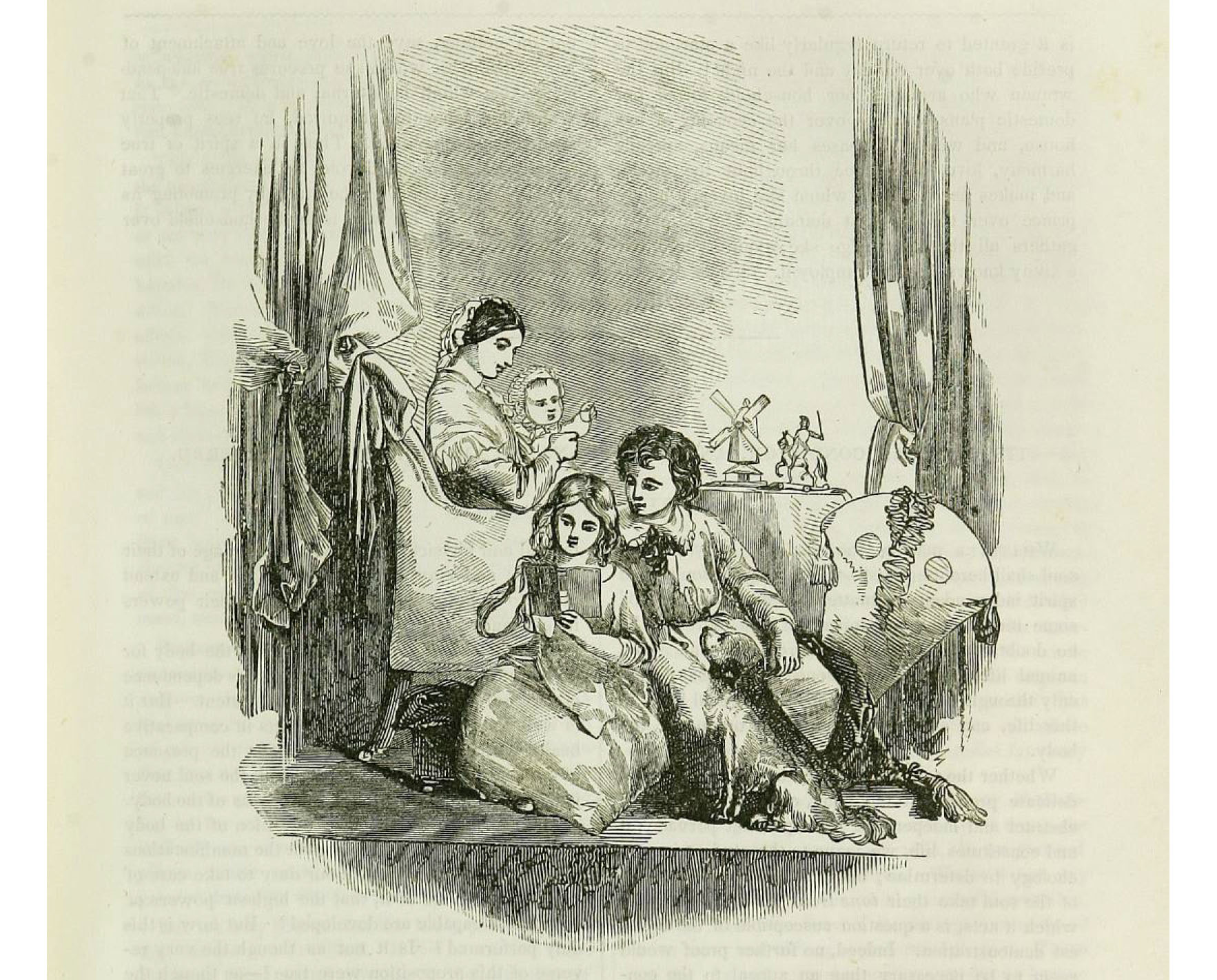
Document 6: "The Sphere of Woman"
The 1850 illustration centers motherhood and children inside a comfortable home, presenting domestic caregiving as women's proper sphere.
Sourcing: Godey's Lady's Book reached middle-class women and helped normalize domestic ideals even as public participation expanded.
Document 7: Elizabeth Cady Stanton
Stanton asks the New York legislature for legal reform and voting rights, making the most direct claim to political citizenship.
Sourcing: Her purpose is to turn Revolutionary equality into female citizenship, showing how far claims had expanded by 1854.
Step 4: Add outside evidence and complexity
| Evidence | How to use it |
|---|---|
| Seneca Falls Convention, 1848 | The Declaration of Sentiments demanded suffrage and legal equality, proving that activism became explicitly political. |
| New York Married Women's Property Act, 1848 | Married women gained more control over property, showing limited legal change before 1855. |
| Lowell Female Labor Reform Association | Female operatives petitioned for a ten-hour day, linking wage labor with collective political action. |
| Grimke sisters or Sojourner Truth | Abolitionist and women's-rights speech placed women in public debate while challenging racial and gender hierarchy. |
Complete model DBQ essay
Context and thesis. The American Revolution popularized natural rights and consent, but it did not immediately give women formal citizenship. Married women remained under coverture, could not vote, and were expected to serve the republic mainly by raising virtuous children. Republican motherhood nevertheless encouraged education, while the Second Great Awakening and Market Revolution created churches, reform societies, and factories through which women could act outside the household. From 1783 to 1855, women's public participation therefore expanded substantially but incompletely. Women entered wage labor, public lecturing, reform, petitioning, and rights campaigns, yet separate spheres, legal dependence, disenfranchisement, racism, and class barriers kept formal power male.
Early expansion within accepted moral roles. Hannah Adams encouraged women to lead a spiritual campaign while conceding male political superiority (Document 1). Religious sponsorship and purpose made female activism appear compatible with Christianity rather than a demand for political equality. The document therefore shows change and continuity at once. By 1801, the anonymous Female Advocate criticized the custom treating learning and public usefulness as male possessions (Document 2). Republican motherhood had made women's education more respectable, but the argument pushed beyond purely domestic learning.
Economic and reform participation. The Market Revolution widened women's roles. Harriet Robinson recalled that mills allowed women to earn and spend wages, making female labor part of the political economy, although property restrictions remained (Document 4). Lowell operatives later organized and petitioned for a ten-hour day. Dorothea Dix investigated prisons and poorhouses and asked Massachusetts lawmakers to establish humane institutions (Document 5). Her male legislative audience mattered: without votes, she used evidence, moral duty, and feminine sensitivity as reasons officials should listen. Domestic virtues became tools for indirect political action.
Race, education, and public speech. Maria Stewart urged African American women to organize, fund education, develop their talents, and seek rights (Document 3). As a free Black woman in an abolitionist setting, she linked women's advancement to racial exclusion. Her speeches and pamphlet mark a major change from the narrower religious role of 1787, while also revealing the combined barriers of racism and sexism.
Direct claims and persistent limits. By the 1840s and 1850s, some activists demanded formal equality. Seneca Falls used Declaration of Independence language to demand suffrage. Stanton similarly told the New York legislature that women were citizens and taxpayers without a voice (Document 7). Her purpose was to redefine women as political persons. Yet "The Sphere of Woman" centered motherhood inside the home (Document 6), and its middle-class female audience helped reinforce domestic ideals. The New York Married Women's Property Act improved some rights, but women still could not vote.
Conclusion and complexity. Women's participation expanded dramatically through wage work, education, reform, speech, and rights advocacy, but change was uneven. Black activists, factory workers, and middle-class reformers entered public life through different routes and faced different limits. Domestic morality was paradoxical: it restricted women while giving reformers an accepted basis for investigating social problems and pressuring government. The range and boldness of public activity changed; the legal and political structure of male authority did not disappear.
| Rubric row | How the response earns it |
|---|---|
| Thesis | Makes an extent judgment, identifies categories of change, and qualifies the argument with continuing limits. |
| Context | Explains Revolutionary republicanism, coverture, republican motherhood, the Second Great Awakening, and the Market Revolution. |
| Document evidence | Uses all seven documents in support of the argument; four are sufficient for the full document-evidence point. |
| Outside evidence | Explains Seneca Falls, Lowell labor organizing, and the New York property law. |
| Sourcing | Explains why purpose, audience, position, or publication context matters for multiple documents. |
| Complexity | Explains uneven change across race and class and the paradox of domestic ideology. |
Use the verified APUSH Unit 4 study notes to review reform, the Market Revolution, and early women's activism.
A reliable six-point LEQ method
- Decode: Identify causation, comparison, or continuity and change over time.
- Context: Describe a broader development that sets up the prompt.
- Thesis: Make a defensible judgment and name two or three organizing categories.
- Evidence: Use at least two specific examples and explain each one.
- Reasoning: Organize around the prompt's logic, not a list of facts.
- Complexity: Qualify the argument, compare groups, explain interacting causes, or address both change and limits.
Long essay option 2
Geography and European Colonization, 1500-1754
Reasoning process: causation, strengthened by comparison among Spanish, French, and British colonial regions.
Plan the argument
| Region | Geographic influence | Specific evidence |
|---|---|---|
| Spanish America | Dense Indigenous populations, mines, and tropical climates encouraged conquest, extraction, and coerced labor. | Encomienda, silver mining, Caribbean sugar |
| French North America | St. Lawrence, Great Lakes, and Mississippi waterways supported dispersed trade and Native alliances. | Fur trade, trading posts, diplomacy |
| British mainland | Climate and soil created regional diversity between plantation zones and commercial family-farm regions. | Chesapeake tobacco, Carolina rice and indigo, New England fishing and commerce |
Complete model LEQ
Context and thesis. Atlantic exploration, mercantilist competition, and the Columbian Exchange brought European empires into environments with different climates, resources, waterways, and Indigenous societies. Geography strongly influenced colonization from 1500 to 1754 by shaping resources, settlement density, and labor systems. Spanish extraction, French commercial networks, and varied British settler colonies reflected those conditions, although policy, religion, and labor choices also mattered.
Spanish colonization. Spanish conquerors entered areas such as Mexico with dense settled populations and tribute systems. Encomienda adapted those systems to colonial labor control. Silver deposits and tropical zones tied colonies to extractive Atlantic markets. Caribbean sugar increasingly relied on enslaved Africans after disease devastated Native populations. Geography created profitable opportunities; Spanish institutions chose coercive exploitation.
French colonization. The St. Lawrence River, Great Lakes, and Mississippi watershed favored mobility and trade rather than dense settlement. Small French populations built posts and exchanged goods for furs. Because force could not control the interior, traders and missionaries depended on Native alliances, diplomacy, and sometimes intermarriage. Rivers connected Canada, the Great Lakes, and Louisiana.
British regional diversity. Chesapeake tidewater supported tobacco, large farms, indentured labor, and later racial slavery. Warm coastal lowlands supported Carolina rice and indigo and a powerful planter elite. New England's rocky soil and short season discouraged staple exports, encouraging family farms, fishing, shipbuilding, Atlantic trade, and compact towns.
Qualification and conclusion. Geography did not determine outcomes alone. Puritan goals encouraged town formation, English property practices promoted settler expansion, and imperial rules structured trade and slavery. Still, land and waterways imposed powerful opportunities and constraints, helping create Spanish extraction, French trade networks, and regionally varied British colonies.
| Row | Evidence in the response |
|---|---|
| Thesis | Clear extent judgment, three regional patterns, and qualification. |
| Context | Atlantic exploration, mercantilism, imperial rivalry, and Columbian Exchange. |
| Evidence | Encomienda, silver, sugar, waterways, fur trade, tobacco, rice, and New England commerce. |
| Reasoning | Causal links between environment and settlement, labor, economy, and diplomacy. |
| Complexity | Geography interacts with religion, policy, disease, and labor choices. |
Long essay option 3
Westward Expansion and U.S. Society, 1865-1898
Reasoning process: causation. Link economic integration, settlement, Native dispossession, migration, racial conflict, and politics.
| Effect | Evidence | Analytical link |
|---|---|---|
| National economy | Transcontinental railroad, federal land grants, Homestead Act, mining, cattle, commercial agriculture | Integrated western resources and farms into national markets. |
| Native dispossession | Buffalo destruction, reservations, Dawes Act, Wounded Knee | Expansion relied on warfare, coercion, and attacks on sovereignty. |
| Migration and race | Chinese railroad labor, anti-Chinese violence, Chinese Exclusion Act | Labor competition and racism reshaped federal immigration policy. |
| Politics and protest | Farmers' Alliances, Populists, railroad rates, debt, currency | Expansion generated agrarian protest against corporate power. |
Complete model LEQ
Context and thesis. Manifest Destiny and the Mexican Cession had already carried the United States to the Pacific. The Homestead and Pacific Railway Acts then laid the legal foundation for postwar development. From 1865 to 1898, expansion integrated western production into national markets, created communities, and stimulated protest, while relying on federal and corporate power and producing Native dispossession, environmental damage, and racial conflict.
Economic integration and settlement. The transcontinental railroad, completed in 1869, reduced travel time, moved migrants and machinery west, and carried cattle, grain, and minerals east. Federal land grants strengthened railroad corporations. The Homestead Act encouraged settlement, while mining booms and cattle drives created towns and jobs. Many farmers nevertheless faced debt, railroad rates, falling prices, and drought.
Native nations and the environment. Settlement, railroads, and commercial hunting destroyed buffalo herds. Federal warfare and reservation policy confined Native peoples. The Dawes Act divided tribal lands into allotments and opened "surplus" land to white settlement. Wounded Knee symbolized the violent suppression of large-scale armed resistance. The West was not empty; expansion attacked Native sovereignty and culture.
Migration, race, and politics. Chinese laborers were essential to railroad construction but became targets of violence and wage-competition claims. Western agitation helped produce the Chinese Exclusion Act of 1882. Indebted farmers formed alliances and supported Populism, demanding railroad regulation, currency expansion, and political reform. Expansion produced both economic opportunity and conflict over concentrated wealth.
Conclusion and complexity. Expansion altered markets, migration, federal policy, Native life, racial ideology, and politics. The self-reliant homesteader image was only partly accurate because settlement was subsidized by law, protected by the Army, and connected by corporations. Opportunity for settlers coexisted with dispossession and exclusion.
| Row | How the response earns it |
|---|---|
| Thesis | Judges influence as profound and names integration, migration, protest, dispossession, and inequality. |
| Context | Manifest Destiny, Mexican Cession, and Civil War-era land and railroad laws. |
| Evidence | Railroad, Homestead Act, Dawes Act, Wounded Knee, Chinese Exclusion, Populism. |
| Reasoning | Explains effects on markets, demographics, Native sovereignty, race, and politics. |
| Complexity | Contrasts opportunity with coercion and links federal power, corporations, and settlement. |
Use the verified APUSH Unit 6 study notes for the period.
Long essay option 4
Politics and U.S. Society, 1945-2000
Reasoning process: causation. Organize around civil-rights liberalism, the Great Society and rights revolution, and conservative resurgence.
| Development | Evidence | Social influence |
|---|---|---|
| Civil-rights liberalism | Brown, Civil Rights Act, Voting Rights Act | Weakened legal segregation and expanded federal citizenship protection. |
| Great Society and rights revolution | Medicare, Medicaid, Immigration Act, Title IX, Roe | Changed health care, education, immigration, family life, and government responsibility. |
| Conservative resurgence | Reagan tax cuts, deregulation, crime policy, welfare reform | Shifted economic expectations, incarceration, public assistance, and cultural debate. |
| Qualification | Civil rights, women's, and conservative movements | Politics was both a cause of and response to social change. |
Complete model LEQ
Context and thesis. World War II and the New Deal left a larger federal government, while wartime service and employment raised demands for equal citizenship. The Cold War made racial discrimination an international liability. Politics then reshaped society through civil-rights law, social policy, immigration, and conservative reform, although movements and economic conditions also shaped what government did.
Civil rights and federal power. Brown v. Board rejected segregated schools. The Civil Rights Act of 1964 prohibited segregation in public accommodations and employment discrimination. The Voting Rights Act of 1965 strengthened federal protection of Black voting. These policies increased participation and made the national government a more active guardian of rights, although residential segregation, economic inequality, and resistance continued.
Great Society and rights revolution. Medicare and Medicaid expanded health access and federal responsibility. The Immigration and Nationality Act of 1965 ended national-origins quotas and contributed to migration from Asia, Latin America, and elsewhere. Title IX expanded women's educational opportunity, while Roe v. Wade made abortion rights central to politics and culture. Policy changed education, health, family life, and population patterns.
Conservative resurgence. Reagan promoted tax cuts, deregulation, antiunion policies, and limited-government language. The War on Drugs and tough-on-crime policies expanded incarceration with disproportionate effects on Black and Latino communities. The 1996 welfare law replaced long-term cash assistance with time limits and work requirements. Conservatism redirected, but did not abolish, Social Security, Medicare, or civil-rights law.
Conclusion and complexity. Politics was a major force because law converted conflict into enforceable national policy. Causation also ran the other way: civil-rights activism pressed for 1960s legislation, the women's movement shaped Title IX and reproductive-rights politics, and grassroots conservatism elected leaders promising tax cuts and traditional values.
| Row | How the response earns it |
|---|---|
| Thesis | Clear judgment organized around civil rights, social policy, and conservative change, with qualification. |
| Context | World War II, New Deal government, wartime equality claims, and Cold War setting. |
| Evidence | Brown, civil-rights laws, Medicare/Medicaid, immigration reform, Title IX, Roe, Reagan policy, crime policy, welfare reform. |
| Reasoning | Explains legal, demographic, economic, and cultural effects. |
| Complexity | Shows two-way causation and continuity within conservative change. |
Final review checklist
- SAQ: Every part starts with a direct answer and includes a specific fact plus an explanation.
- DBQ: Include a thesis, context, at least four documents used in an argument, outside evidence, sourcing for at least two documents, and a complexity move.
- LEQ: Include a thesis, context, at least two specific examples, sustained reasoning, and a qualification or comparison.
- All questions: Keep evidence inside the prompt's time frame, spell proper nouns clearly, and leave no required part unanswered.
| Task | Suggested plan |
|---|---|
| Each SAQ | About 13 minutes: 2 to plan, 9 to write, 2 to check all parts. |
| DBQ | About 60 minutes: 15 to read/group/plan, 40 to write, 5 to add missing sourcing or outside evidence. |
| LEQ | About 40 minutes: 5-7 to plan, 30 to write, 3-5 to check thesis, evidence, and reasoning. |